
Table of Contents
ToggleHigh Value Transaction Income Tax Notice? Don't Panic — Do This
Imagine this. Rohit sold his old flat, deposited the money in his savings account, and forgot all about it. Six months later, an SMS arrives: “The Income Tax Department has certain information about high value transactions in your case.” His heart skips a beat. Did he do something illegal? Is a raid coming?
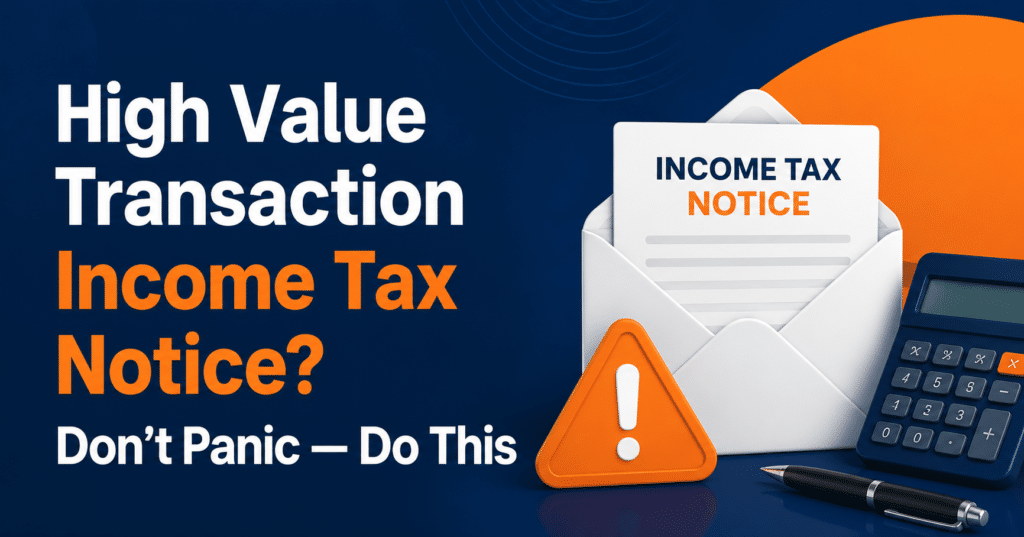
The answer is no. Rohit simply received a high value transaction income tax notice — one of the most common and most misunderstood messages the department sends. If you have received one too, take a breath. This guide from CharteredHelp will tell you exactly why it came and how to close it in minutes.
First, Understand What This Notice Really Means
The Income Tax Department does not watch your bank account every day. Instead, banks, sub-registrars, mutual fund houses and credit card companies quietly report your big transactions to it. They do this through a report called the Statement of Financial Transactions (SFT), filed in Form 61A.
All of this data lands in your Annual Information Statement (AIS). The department then compares it with the income you showed in your ITR. When the two don’t match — say your account shows ₹25 lakh but your return shows income of ₹6 lakh — a red flag is raised. That flag becomes your high value transaction income tax notice.
So the notice is not an accusation. It is a question: “We see this big transaction. Can you confirm where the money came from?” Answer it well, and the matter ends there.
The Exact Limits That Get You Flagged
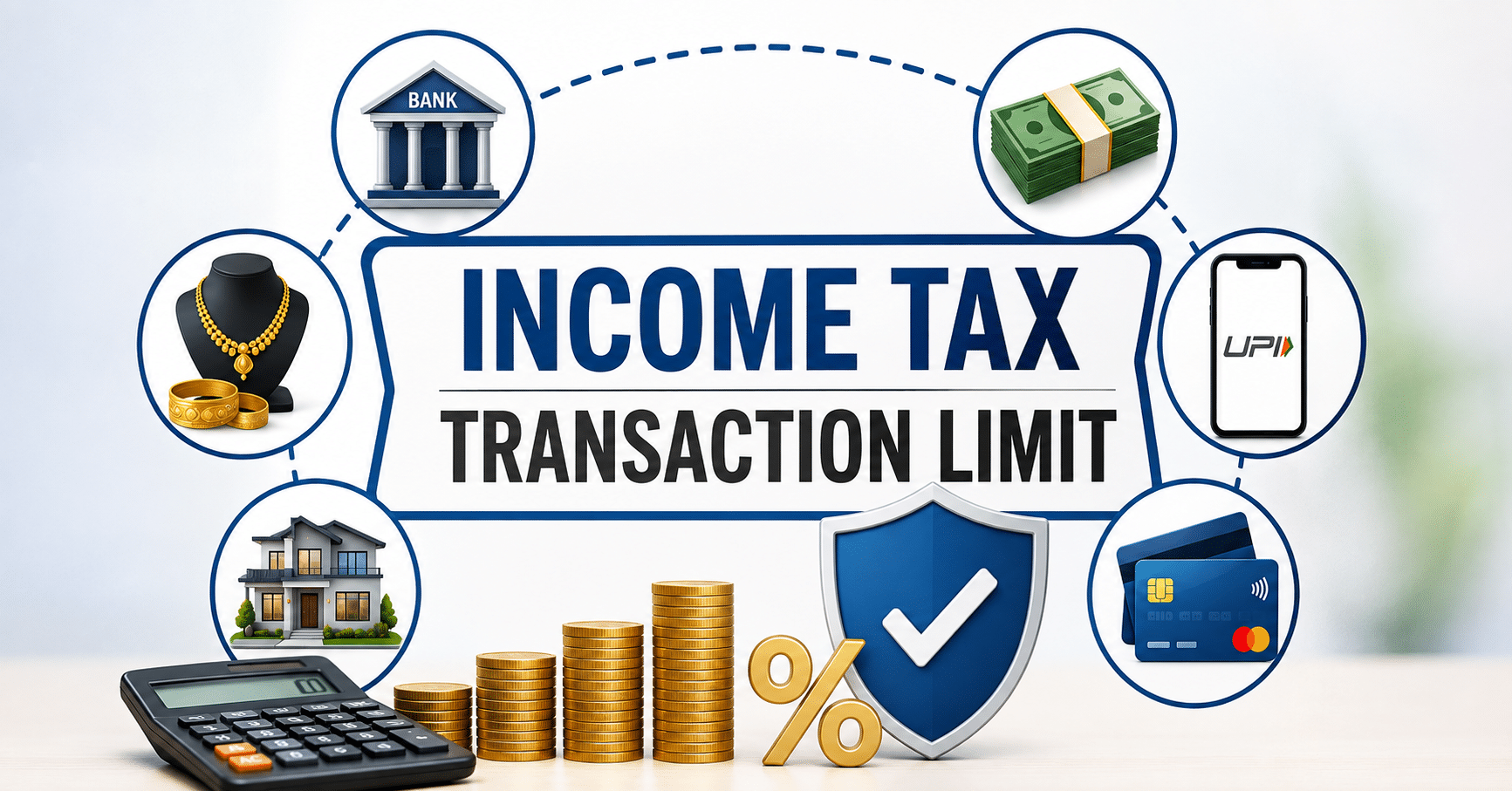
Most people get flagged simply because they didn’t know a limit existed. Here are the thresholds. Cross any of these in a financial year, and the transaction gets reported:
| Transaction | Limit (per year) |
|---|---|
| Cash deposit in savings account | ₹10 lakh |
| Cash deposit/withdrawal in current account | ₹50 lakh |
| Fixed deposit / recurring deposit | ₹10 lakh |
| Buying or selling property | ₹30 lakh |
| Shares, mutual funds, bonds, debentures | ₹10 lakh |
| Credit card bill paid in cash | ₹1 lakh |
| Credit card bill paid by other modes | ₹10 lakh |
| Buying or spending foreign currency | ₹10 lakh |
What's new in 2026 — pay attention.
The net is now wider. Crypto-asset transactions are officially reportable under the Income Tax Act, 2025, and even stamp paper purchases above ₹2 lakh (₹1 lakh without PAN) are being tracked from April 2026. Under Budget 2026, the penalty on reporting entities for missing an SFT has been reworked into a fee capped at ₹1,00,000 — a sign the department is tightening the whole system, not loosening it.
The Mistake That Traps Honest People
Here is the trap almost everyone falls into: they think the limit applies to each transaction. It does not. It applies to your yearly total across all accounts of the same type.
Example: Meena deposits ₹6 lakh in her HDFC savings account and ₹6 lakh in her ICICI savings account. Individually, both are under ₹10 lakh. But the department adds them — ₹12 lakh total — and it becomes reportable. Splitting cash to “stay safe” actually looks more suspicious, because banks file separate suspicious-pattern reports for exactly this behaviour.
So the rule is simple: it’s not about hiding the transaction, it’s about being ready to explain it.
Why You Got the Notice — The Two Real Reasons
The department sends these e-Campaign alerts for only two reasons:
- You didn’t file your ITR at all, but a big transaction is sitting against your PAN.
- You filed your ITR, but it doesn’t match the transactions in your AIS.
In most genuine cases the money is completely clean — sale of property, a gift from family, a matured investment, or a loan. The department just wants confirmation. The real danger is never the notice itself; it is ignoring it, because silence can convert a simple query into a full scrutiny case.
Don't Let Cash Turn a Query Into a Penalty
Cash is what turns a harmless notice into a real problem. Keep these in mind:
- Section 269SS / 269T — accepting or repaying a loan/deposit of ₹20,000+ in cash can cost you a penalty of the same amount.
- Section 269ST — receiving ₹2 lakh+ in cash from one person in a day invites a matching penalty.
- Section 40A(3) — business cash payments above ₹10,000 (₹35,000 for transporters) are disallowed as expense.
- Section 80G — cash donations above ₹2,000 get no deduction.
These penalties can reach 100% of the amount involved. The lesson is clear: route large payments through the bank, always.
Where CharteredHelp Comes In
Reading an AIS line by line, matching it against your ITR, and choosing the right response option is where most people slip. One careless reply can invite scrutiny instead of closing the file. At CharteredHelp, our experts study your transactions, draft an accurate response on the compliance portal, and file revised returns wherever required — so you stay calm and fully compliant.
If a high value transaction income tax notice is sitting in your inbox right now, don’t let it grow into a bigger issue. Talk to CharteredHelp today and let us handle it end to end.
Frequently Asked Questions
No. It is a routine e-Campaign alert asking you to confirm a transaction. Reply properly and it usually ends there.
Select “Information relates to other person” or “Denied” on the compliance portal and give your explanation.
Respond as soon as you get the SMS or email. Delay is what invites further action.
Yes. These alerts often arrive months later, so always keep your source documents ready.

CharteredHelp is a team of experienced professionals providing tax, accounting, auditing, and compliance services for businesses and individuals. With over 10+ years of experience, we assist clients with GST registration and filings, income tax returns, company registration, trademark services, accounting, auditing, and handling tax notices. Our focus is on providing practical, reliable, and timely support to help clients stay compliant and grow their businesses with confidence.